Our Community Programs

MENTAL HEALTH SUPPORT In RURAL AND REGIONAL COMMUNITIES

Support for mental health in rural and regional areas has never been more important.

That is why we’re committed to supporting areas with disaster vulnerability and/or mental health needs across Australia with a place-based, whole-community approach to building resilience and preparedness. 

The state of mental health in rural and regional locations

In regional Australia, the prevalence of mental illness is just as high, if not higher, compared to inner-city locations. However, as areas get more remote, there is significantly reduced access to mental health care and services (National Rural Health Alliance, 2017). Additionally, rates of suicide and self-harm are significantly higher in remote and rural areas, and increase with increasing remoteness (Harrison & Henley, 2014).


A preventative mental-health approach, like our program, is the key to equipping people with the tools to experience positive emotions, so they are more likely to cope in challenging times.


This drives us to continue this important work within the communities that need it most. 

1 in 4

Primary students are suffering from mental ill health.

1 in 3

Secondary students are suffering from Mental ill health.

65%

of adolescents do not seek help.

What is our community approach?

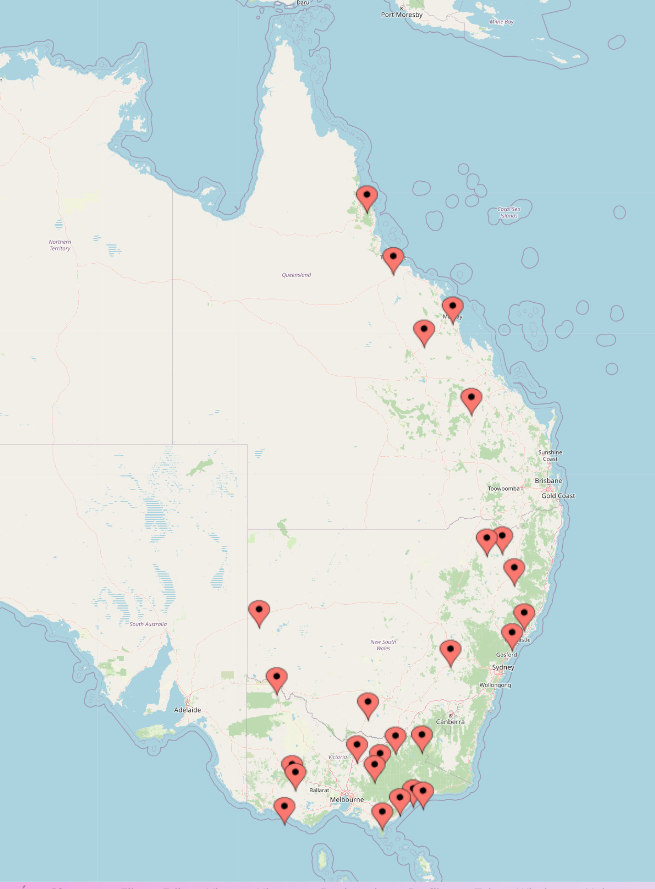
Our community approach is scalable, replicable and sustainable, as demonstrated by the 29 communities we have worked across Australia over the last three years. These communities alone represent 225 schools, 74,000 students and 4000 educators.

1. Raise Awareness

2. Embed Behaviours

3. Measure Impact

We partner with local stakeholders (ie. local council, community organisation or DET wellbeing personnel) to collaboratively engage with 6-12 schools and understand the local context. We launch the program locally with a series of community events/ presentations, designed to build capacity in the educators, and inspire a common awareness.


The holistic program continues to embed behavioural change in educators, students, parents and carers through the robust annual teaching and learning program and is periodically measured through The Resilient Youth Survey.


We proactively equip people with the tools to better navigate the challenging times as they inevitably arise. It builds skills to support and instil positive mental wellbeing and prevent poor mental health.

Communities we've worked with

QLD:

  • Cairns 
  • Mackay 
  • Moranbah
  • Moura
  • Townsville


NSW:

  • Broken Hill
  • Eugowra
  • Forbes
  • Gwydir
  • Hawksbury
  • Inverell
  • Maitland
  • Mid Coast
  • Moree
  • Murrumbidgee
  • Narrabri
  • Northern Tablelands
  • Orange
  • Penrith


VIC:

  • Ararat
  • Bairnsdale
  • Echuca
  • Geelong
  • Greater Shepparton
  • Hume
  • Lakes Entrance
  • Mansfield
  • Mildura
  • Rochester
  • Sale
  • South Gippsland
  • Stawell
  • Towong
  • Warrnambool
  • Wodonga
  •  

Impact of this approach

The program has been evaluated by University of Adelaide and University of Melbourne, achieving favourable and cumulative impact across social, emotional and physical wellbeing. In the North Queensland case study, it found the program improved their students’ mental health, as well as improvement in engagement, life satisfaction and hopefulness.


The preliminary results of the latest Monash University research spoke to the beneficial and cumulative impact of having a longer term commitment to the TRP wellbeing program, noting a 20% reduction in symptoms of anxiety and a 31% reduction in symptoms of depression for schools who had been doing the program for 6-7 years.

Testimonials & read more

Thank you to our partners ...